With the start of Russia’s full-scale invasion, many Ukrainian enterprises and citizens lost property, assets and means of production. The question of compensation for losses caused by Russia, has become more relevant than ever. Although the first court cases against the aggressor country began back in 2014, judicial practice in this area remains at the stage of its formation, which creates significant challenges for Ukrainian justice.
Today commercial courts are forced to adapt peacetime legal norms to the scale of military aggression, which requires bold and innovative decisions.
The Main Obstacle: The Principle of Judicial Immunity
For a long time, the key obstacle for Ukrainian courts was the provision of Article 79 of the Law of Ukraine “On Private International Law”. Under this rule, a foreign state, which in this case is the Russian Federation, enjoys judicial immunity and cannot be held liable in the national court of another country without its consent.
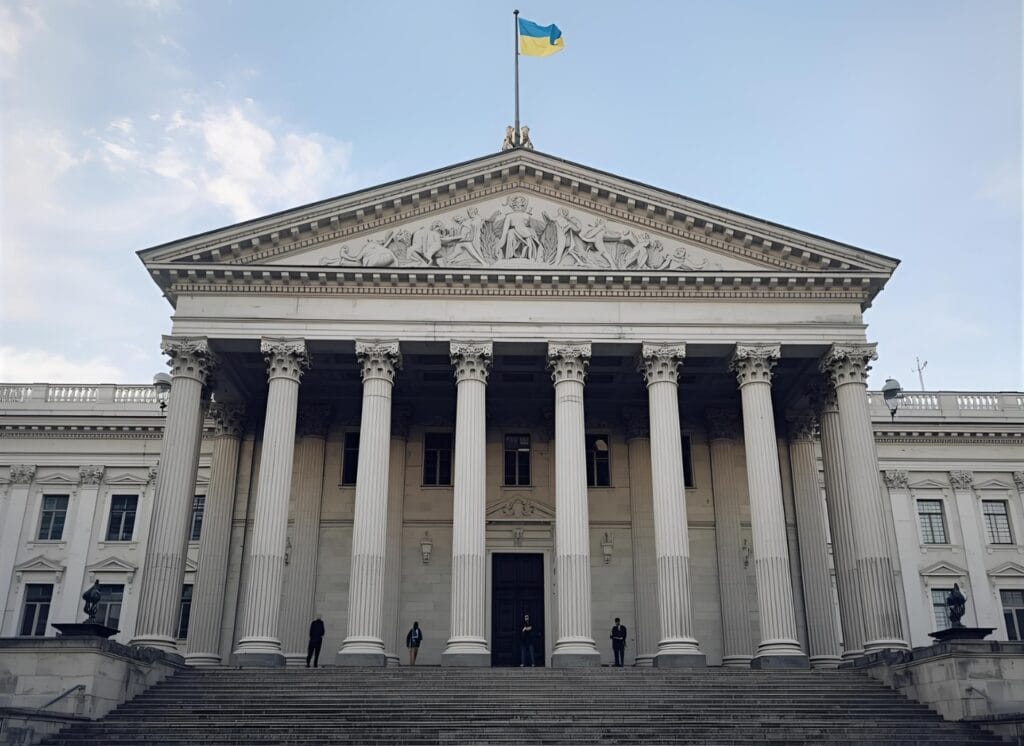
This rule created an almost insurmountable obstacle to opening proceedings in cases where Russia was the defendant.
A Revolutionary Step: The “Tort Exception” from the Supreme Court
The issue was resolved thanks to a landmark decision of the Supreme Court. In its ruling of April 14, 2022 (case No. 308/9708/19) it concluded that a Ukrainian court has the right to disregard the immunity of the Russian Federation and to hear cases on compensation for damage caused by military aggression.
What is the “tort exception”? This principle of international law means that judicial immunity does not extend to disputes arising from damage caused on the territory of the state where the claim is heard. Thus, any dispute that arose on the territory of Ukraine may be heard by a Ukrainian court as the proper and competent one.
Additional Arguments in Favor of Claims
In subsequent rulings (for example, in case No. 428/11673/19) the Supreme Court provided additional arguments justifying the absence of the aggressor’s judicial immunity:
The right of access to court. Maintaining immunity would deprive the plaintiff of the opportunity to effectively protect their rights, which is a violation of Article 6 of the Convention for the Protection of Human Rights.
Violation of sovereignty. Russia’s aggression is not an exercise of its sovereign rights, which are protected by immunity.
The fight against terrorism. Maintaining Russia’s immunity is incompatible with Ukraine’s international obligations in the field of combating terrorism.
Although these conclusions were adopted in civil cases and are formally not binding on commercial courts, in practice they are actively used. Commercial courts, also relying on Article 124 of the Constitution of Ukraine, which grants them jurisdiction over any legal dispute, open proceedings and hear claims against the Russian Federation for the purpose of compensation for losses.
A Claim Against Russia: Who Is the Proper Defendant in Cases on Compensation for Losses?
When Ukrainian companies and citizens face the problem of compensation for losses caused by military aggression, the first question is who is the defendant? Although it is logical that the aggressor state bears responsibility, Ukrainian judicial practice on this issue is ambiguous. Determining the proper defendant is a key stage that may determine the success of your claim.
The Aggressor’s Legal Liability: The Legislative Basis
Ukrainian legislation clearly places responsibility for the damage caused on the Russian Federation. Under Article 5 of the Law of Ukraine “On Ensuring the Rights and Freedoms of Citizens and the Legal Regime on the Temporarily Occupied Territory of Ukraine”, compensation for material and moral damage in full is placed on the Russian Federation as the state carrying out the occupation.
Thus, there is no doubt as to liability. However, the question arises: how to hold the state itself accountable?
A Legal Conflict: The Problem of Identifying the Defendant
Under the Ukrainian procedural codes (the Commercial Procedure Code, the Civil Procedure Code), a foreign state cannot be a defendant in court. But this rule contradicts the new judicial practice initiated by the Supreme Court, which allows disregarding Russia’s judicial immunity. This has led to a significant divergence in the decisions of commercial courts:
Some courts open proceedings and satisfy claims against the Russian Federation (for example, in cases No. 910/6230/22, No. 910/4720/22).
Other courts refuse to open proceedings, citing the fact that a state cannot be a defendant (cases No. 910/13766/22, No. 910/14829/22).
Options for Representing Russia in Court
An analysis of court decisions shows that there are several approaches to determining the proper defendant. Instead of the state directly, plaintiffs involve its bodies.
The Ministry of Defense of Russia. In case No. 910/10517/22 a claim for compensation for damage was satisfied specifically against Russia represented by its ministry of defense. In this case the court clearly established the involvement of this body in the missile strike, which was confirmed even by their official briefings.
The Prosecutor General’s Office of Russia. In case No. 925/903/22 the defendant was recognized as the Prosecutor General’s Office of Russia, since under Russian law it is responsible for representing the interests of the state in foreign courts.
There were also cases where the defendant was identified as the embassy or even the president of Russia.
The Optimal Strategy: Why Choose the Ministry of Justice of Russia?
The most well-grounded and balanced approach, in our opinion, is filing a claim against the Russian Federation represented by its Ministry of Justice. This is because, under a decree of the president of Russia, it is precisely the Ministry of Justice that is authorized to represent the interests of the state in the courts of foreign states.
This choice is important not only from the point of view of legal certainty, but also for practical reasons, since it allows the procedural requirements for proper notification of the defendant about the hearing of the case to be met.
Choosing the proper defendant is key to success in cases on compensation for losses from aggression. Despite the ambiguous judicial practice, a unified approach to this issue will make it possible to speed up the consideration of cases and achieve justice.
Litigation with Russia: How to Notify the Defendant and Determine Jurisdiction?
Filing a claim against Russia is only the beginning. For the case to move forward, two key procedural issues need to be resolved: how to properly notify the defendant about the court hearing and which court should hear the case. Given the circumstances of wartime, traditional methods do not work here.

How to Notify the Defendant About the Hearing of the Case?
Due to the severance of diplomatic and postal relations between Ukraine and Russia, standard sending of postal correspondence is impossible. The courts, aware of this problem, apply a “compromise” practice: they open proceedings without proof of sending documents to the defendant and limit themselves to publishing announcements on the website of the Judiciary of Ukraine.
Although this formally complies with the letter of the law, this approach contradicts the principle of equality of the parties, since the defendant may not be informed about the case. In the opinion of the European Court of Human Rights, each party must have a reasonable opportunity to defend itself.
Recommended Approach for Proper Notification
To avoid risks, plaintiffs should take the initiative. We recommend using electronic means of communication:
This approach is simple but consistent with the principles of good faith. The court, having proof of your attempt to notify the defendant, may act on the basis of a “presumption of awareness”, which will significantly strengthen your position.
Territorial Jurisdiction: Where to File the Claim?
Determining the correct court is also critically important.
Rules for Disputes on Compensation for Losses
As a general rule, a claim is filed at the location of the defendant, which in the case of Russia is impossible. Therefore, courts use other rules:
Damage to immovable property: If the dispute concerns damage to or destruction of real estate, the rule of exclusive jurisdiction applies. The claim must be filed with the commercial court at the location of this property.
Other losses: If damage was caused to movable property (equipment, goods), then under part 8 of Article 29 of the Commercial Procedure Code of Ukraine, the claim may be filed at the place where the damage was inflicted. This often coincides with the location of the plaintiff itself.
The Most Common Approaches to Jurisdiction
In practice, various options are encountered, which indicates the absence of unified judicial practice:
A claim at the location of the embassy. Some lawyers file claims with the Commercial Court of Kyiv, justifying this by the fact that the embassy of Russia in Kyiv is its representation. This complies with procedural rules but creates an excessive burden on a single court.
A claim at the place where the damage was inflicted. This approach is the most justified. It not only allows courts to distribute the burden evenly, but is also convenient for the plaintiff, since it makes it possible to defend one’s rights in a court at the place of one’s residence or business.
Real Mechanisms: How to Achieve Enforcement of Court Decisions Against Russia?
Successfully obtaining a court decision on compensation for losses caused by the Russian Federation is only half the matter. Unfortunately, the most difficult issue today is the actual enforcement of court decisions. Frankly speaking, an effective mechanism that would compel the aggressor country to voluntarily comply with a court decision does not yet exist.
The Main Problem: Enforcement at the Expense of Confiscated Assets
The only real way to achieve compensation is to recover the losses at the expense of frozen and confiscated assets of Russia. However, there is an important nuance:
Under Ukrainian law, forcibly seized objects of property of the Russian Federation and its residents pass into the state ownership of Ukraine.
These funds are directed to the state budget, in particular to the Fund for the Elimination of the Consequences of Armed Aggression.
In effect, these funds cannot be used for the direct enforcement of court decisions in favor of individual natural or legal persons.
Therefore, at present all adopted court decisions are, in essence, assets for the future. Their realization depends on the development and implementation of special compensation mechanisms.
The Prospect: Creating an International Compensation Fund
One of the most realistic scenarios is the creation of a special fund in Ukraine. It could be filled with the support of international partners. Subsequently, these payments will be compensated at the expense of reparations that the aggressor will be forced to pay.
Systemic Problems: Why Peacetime Laws Do Not Work?
Today Ukrainian courts are forced to adapt peacetime legal norms to the unprecedented challenges of war. The practice that had been forming since 2014 turned out to be insufficient for the scale of the full-scale invasion.
Resolving these problems is possible only through amendments to the legislation, in particular:
A clear delimitation of jurisdiction between courts of different instances in cases against Russia.
Legislative consolidation of the absence of judicial immunity for the aggressor country.
Defining a clear procedure for proper notification of the defendant in conditions of severed diplomatic relations.
It is worth noting that a draft law (No. 7520) aimed at resolving these issues has already been registered in the Verkhovna Rada. However, its adoption and entry into force will require time.
Given these realities, courts are for now forced to rely on judicial discretion and the practice of the Supreme Court.
Frequently Asked Questions
Who is the proper defendant in cases on compensation for damage from Russia’s aggression?
The proper defendant is the aggressor state, the Russian Federation. Correctly identifying the defendant is key to the claim.
Which court hears such claims?
Jurisdiction is determined by the rules of procedural law. An error with jurisdiction may lead to the return of the claim, so this should be agreed with a lawyer.
How to notify the defendant about the claim?
Through the notification mechanisms provided by law, which in practice have their peculiarities, and which the lawyer takes into account when preparing the case.
Is it realistic to enforce a decision against Russia?
Enforcement is complicated, but mechanisms exist, in particular at the expense of the seized assets of the aggressor state. Prospects are assessed individually.
Is a lawyer needed in such cases?
Yes, these cases are complex due to the questions of the defendant, jurisdiction and enforcement of the decision, so the support of a lawyer significantly increases the chances.
Готові допомогти з вашою справоюЗалиште заявку, і адвокат звʼяжеться з вами. Конфіденційно, цілодобово.